

 Por: Ethan
Inteligência de Embalagens — Série Cadeia de Frio
Uma análise baseada em dados sobre por que a atmosfera selada supera consistentemente o desempenho do filme solto — e quando não é necessário.
Resposta direta: A bandeja MAP retém o gás de maneira muito mais eficaz do que o filme de embalagem
A Bandeja MAPA (Bandeja de embalagem com atmosfera modificada) retém sua mistura interna de gases significativamente melhor do que a embalagem de filme envolvente porque depende de uma bandeja rígida ou semirrígida selada com uma película de alta barreira, criando uma câmara totalmente fechada e resistente a vazamentos. O filme overwrap, por outro lado, é um filme extensível ou retrátil aplicado de maneira solta, enrolado em uma bandeja ou produto sem uma vedação hermética verdadeira, permitindo que o gás escape e o ar externo penetre com o tempo.
Em termos práticos, uma bandeja MAP devidamente selada pode manter a composição do gás alvo para 10 a 21 dias dependendo do produto e das propriedades de barreira do filme, enquanto a embalagem de filme normalmente perde significativa retenção de gás dentro 1 a 3 dias . Para processadores de alimentos, varejistas e engenheiros de embalagens que decidem entre esses dois formatos, a escolha se resume a saber se a vida útil prolongada e a atmosfera controlada são prioridades de negócios ou se embalagens de exibição de curto prazo com custo mais baixo são o objetivo principal.
"O selo é a história. Um pacote é tão bom quanto a lacuna mais fraca em seu perímetro."
Compreendendo o mecanismo central por trás da retenção de gás
O desempenho da retenção de gás é determinado quase inteiramente pelo grau de vedação da embalagem contra o ambiente externo. Uma bandeja MAP é normalmente termoformada a partir de materiais como PET, PP ou CPET e depois lavada com uma mistura de gases específica, geralmente uma combinação de dióxido de carbono, nitrogênio e, às vezes, oxigênio, antes de ser selada com uma película de tampa selada a quente. Isto cria um sistema fechado onde a troca gasosa com a atmosfera externa é mínima, muitas vezes medida em taxas de transmissão de oxigênio (OTR) tão baixas quanto 3 a 15 cc/m²/dia para estruturas de alta barreira.
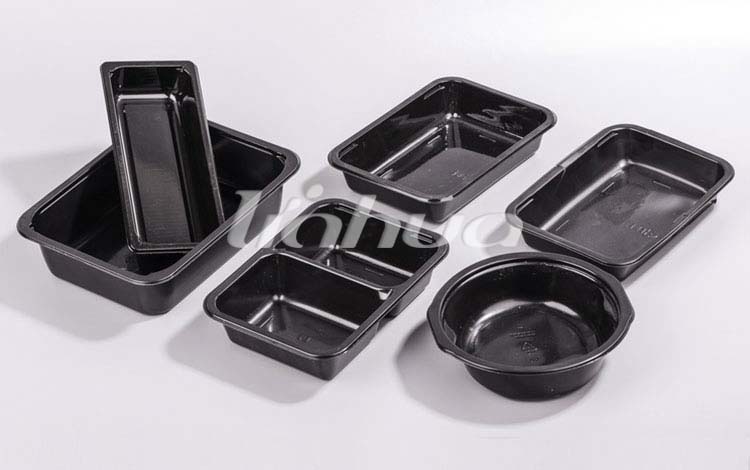
Bandeja MAPA
A embalagem de filme overwrap opera segundo um princípio totalmente diferente. Em vez de formar uma câmara selada, o filme é esticado ou encolhido ao redor do produto e da bandeja, deixando pequenas lacunas nas dobras e bordas por onde o ar pode passar. Mesmo quando o filme em si possui propriedades de barreira decentes, o sistema de embalagem como um todo não é hermético, o que significa que qualquer descarga de gás feita antes do acondicionamento é rapidamente comprometida.
Comparação lado a lado do desempenho de retenção de gás
A tabela abaixo resume as diferenças práticas entre a bandeja MAP e a embalagem de filme overwrap em diversas métricas de desempenho relevantes para a retenção de gás e a vida útil.
| Fator de Desempenho | Bandeja MAPA | Filme de sobreposição |
|---|---|---|
| Tipo de vedação | Selo térmico hermético | Envoltório solto, sem selo verdadeiro |
| Duração típica de retenção de gás | 10–21 dias | 1–3 dias |
| Taxa de transmissão de oxigênio | 3–15 cc/m²/dia | 50–150 cc/m²/dia |
| Investimento em equipamentos | Superior (selador, sistema de descarga de gás) | Inferior (somente máquina de embalar) |
| Produtos mais adequados | Carne fresca, frutos do mar, refeições prontas | Produtos hortifrutigranjeiros, padaria, itens com prazo de validade curto |
Por que a integridade da vedação é mais importante do que a espessura do filme
Um equívoco comum é que um filme mais espesso ou de maior qualidade por si só determina a retenção de gás. Na realidade, a integridade da vedação desempenha um papel mais importante do que a espessura da matéria-prima. Uma bandeja MAP com uma película de cobertura mais fina, mas com uma vedação térmica consistente e livre de contaminação, superará um sistema de sobreembalagem que usa uma película mais espessa, mas com espaços de ar nas dobras.
Pontos comuns de falha de vedação em filme de revestimento
- Sobreposições de dobra que não se comprimem totalmente contra a superfície da bandeja
- Túneis termorretráteis que deixam microlacunas nos cantos das bandejas
- Risco de perfuração do filme devido a bordas afiadas do produto, como cortes com osso
- Tensão inconsistente durante o empacotamento, causando seções soltas
Nota: Esses pontos de falha explicam por que o filme de revestimento, mesmo quando se utiliza materiais de grau de barreira, não consegue corresponder à consistência de retenção de gás de um sistema de bandeja devidamente selado.
Impacto na qualidade do produto e na vida útil
A retenção de gases afeta diretamente a qualidade visível do produto, principalmente de carne vermelha, aves e frutos do mar. Em sistemas de bandejas MAP que utilizam uma mistura de dióxido de carbono e nitrogênio, os produtos podem manter a estabilidade da cor e reduzir o crescimento microbiano por longos períodos. Testes em diversas instalações mostraram que a carne moída fresca embalada em uma bandeja MAP pode reter uma cor aceitável e reduzir os indicadores de deterioração para até 14 dias sob condições refrigeradas, em comparação com 3 a 5 dias para o mesmo produto em filme overwrap.
Esta lacuna no desempenho torna-se especialmente importante para os retalhistas que gerem a distribuição em cadeias de abastecimento mais longas, onde dias adicionais de prazo de validade podem reduzir o desperdício e melhorar a flexibilidade do inventário. Para ciclos de distribuição locais mais curtos, no entanto, a vantagem de prazo de validade da bandeja MAP pode ser menos crítica, o que é um dos motivos pelos quais o filme sobreembalado continua popular para produtos de consumo diário, como itens de panificação e produtos frescos.
Considerações sobre custos e equipamentos
Embora a bandeja MAP ofereça vantagens claras de retenção de gás, ela acarreta custos iniciais mais elevados. Uma máquina seladora de bandeja com descarga de gás requer um investimento de capital maior do que uma linha de embalagem padrão, e as próprias bandejas, juntamente com o filme de barreira de cobertura, normalmente custam mais por unidade do que o filme de embalagem básico. Para operações de alto volume que manuseiam proteínas perecíveis, esse custo geralmente é justificado pela redução da deterioração e pelo prolongamento do prazo de validade comercializável.
Principais fatores de custo a serem avaliados
- Custo do material da bandeja por unidade (PET, PP ou CPET)
- Grau e custo da barreira do filme de cobertura
- Fornecimento de gás e manutenção do sistema de lavagem
- Diferenças na velocidade de produção da máquina
- Redução no encolhimento e retornos devido ao prolongamento da vida útil
Como as escolhas de design de bandeja influenciam o desempenho geral
Nem todas as bandejas usadas em embalagens retentivas de gás são idênticas. Profundidade, rigidez e acabamento superficial afetam o quão bem uma película de tampa pode formar uma vedação completa. Bandejas mais profundas com cantos arredondados tendem a vedar de forma mais confiável do que bandejas rasas com bordas afiadas, uma vez que cantos afiados são mais propensos a microvazamentos durante o processo de vedação. Esse é um dos motivos pelos quais muitos engenheiros de embalagem que avaliam bandejas para embalar proteínas perecíveis preferem designs um pouco mais profundos e com cantos arredondados em vez de bandejas planas e largas.
Curiosamente, princípios de vedação semelhantes se aplicam fora da indústria alimentícia. Um bandeja de embalagem blister usado para produtos farmacêuticos ou pequenos bens de consumo baseia-se na mesma ideia central: uma cavidade rígida combinada com um material de cobertura firmemente colado para evitar a entrada de ar e umidade. Embora a aplicação seja diferente, o desafio de engenharia subjacente, conseguir uma vedação consistente e sem lacunas, é quase idêntico ao que os sistemas de bandejas MAP devem realizar para produtos alimentícios.
Dica de projeto: A geometria da bandeja com cantos arredondados reduz a probabilidade de microvazamentos no perímetro de vedação, independentemente do setor em que a bandeja é usada.
Recomendações práticas para escolher entre os dois formatos
A escolha entre a bandeja MAP e o filme de cobertura deve ser baseada no tipo de produto, no prazo de validade exigido e na distância de distribuição, e não apenas no custo. A orientação a seguir pode ajudar a simplificar o processo de decisão.
Quando a bandeja MAP é a melhor escolha
- Produtos que requerem prazo de validade superior a 5 a 7 dias
- Carne fresca, aves ou frutos do mar sensíveis à oxidação
- Distribuição de longa distância ou remessas de exportação
- Refeições prontas que necessitam de atmosfera controlada para segurança
Quando o filme overwrap é a opção prática
- Produtos de giro rápido vendidos em 1 a 3 dias
- Produtos de panificação e produtos frescos com necessidades de respiração natural
- Operações de orçamento mais baixo priorizando a eficiência de custos
- Distribuição varejista local e de curta distância
Conclusão: As empresas que lidam com proteínas perecíveis com demandas de prazo de validade mais longo descobrem consistentemente que o investimento em sistemas de bandejas MAP compensa através da redução de deterioração, melhor apresentação do produto e maior flexibilidade de distribuição.
Conclusão final sobre desempenho de retenção de gás
Quando a retenção de gás é a principal preocupação, a bandeja MAP supera consistentemente o filme de revestimento devido ao seu design selado e de atmosfera controlada. A diferença de desempenho não é marginal; muitas vezes é a diferença entre um produto permanecer fresco por duas semanas e apenas alguns dias. Para qualquer operação que avalie bandejas para embalar produtos perecíveis ou sensíveis ao oxigênio, compreender essa distinção é essencial para fazer uma escolha de embalagem que proteja a qualidade e a lucratividade do produto.
.jpg?imageView2/2/w/600/h/600/format/webp/q/75)
.jpg?imageView2/2/w/600/h/600/format/webp/q/75)



Publique comentário